2/26/2024 Regular Meeting & New Library Policy

The regular school board meeting began at 5:30pm with all members present. Superintendent Elstad recognized Owatonna students during Mission Moment. Two students are recognized as ExCEL Award nominees and two students are recognized as Triple A Award nominees. Great work students!

No one presented for Public Forum.

The enrollment report was reviewed with no significant changes or comments.

Members presented during Board Forum noting opening weekend of our high school’s musical Newsies, and great performances that entertained many in our new Wenger Performing Arts Auditorium. Committee meeting minutes were reviewed from the most recent meetings of the Facility and Policy committees with no comments or questions. Our student representatives noted recent events including speech team tournaments.

Superintendent Elstad gave the Administrative Report, mentioning the second Input Team meeting on 2/20/2024 for the K-5 attendance boundary changes and the upcoming special work session for the school board to review and discuss these plans: 4:30-6pm at the district office on 3/5/2024. Mr. Elstad is also working with the legislation to try and lessen the tax burden for Owatonna citizens. He will testify soon. Plus, there is work in progress for an amendment to the School Resource Officer legislation passed last year. He will spend time in St. Paul next week for “Day at the Capitol.” Mrs. Julie Sullivan gave a brief update on the American Indian Education plan. We have 10 students in our district with Native American heritage and after reaching out to those families, one parent came forward to work with the district. They are working to schedule a meeting soon. There is no state funding if a district has less than 20 Native American students.

The Consent Agenda was approved with a 7-0 vote and included the meeting minutes from 1/22/2024 and 2/12/2024, the disbursement reports, and the personnel report.

Two policies were reviewed. There is a link to each policy on the meeting agenda: https://meetings.boardbook.org/Public/Agenda/1055?meeting=620607. The graduation requirements changed slightly due to 2023 legislation and our policy #613 was updated to reflect those changes. The new Library Policy #606.5 was presented for a second reading and vote. My concerns with the policy as it is currently written is that it’s too generalized and vague, there is not enough accountability, and the school board is not involved in any of the processes of material selection or material reconsideration/appeals. Please understand that it is not my intention to “ban books” or to limit anyone’s access to books, but rather to provide guidelines for book and material selection for public school (emphasis on public school, my opinion in this regard is not for any other public entity including the city library or bookstores.)

Our Electronic Technologies Acceptable Use policy, #524, has more specific well-defined guidelines for what our students are not allowed to access:

V. UNACCEPTABLE USES… A. …the following uses of the District’s Electronic Technologies and Internet resources or accounts are considered to be unacceptable:

  1. Users will not use the School District system to access, review, upload,
    download, store, print, post, receive, transmit or distribute:
    a. pornographic, obscene or sexually explicit material or other visual
    depictions that are harmful to minors;
    b. obscene, abusive, profane, lewd, vulgar, rude, inflammatory,
    threatening, disrespectful, or sexually explicit language;
    c. materials that use language or images that are inappropriate in the
    education setting or disruptive to the educational process;
    d. information or materials that could cause damage or danger of disruption to the educational process e. materials that use language or images that advocate illegal or dangerous acts or that advocate violence or discrimination toward other people (hate literature) or that may constitute harassment or discrimination.

VI. FILTER… …A. The technology protection measures utilized will block or filter Internet access to any visual depictions that are:

  1. Obscene in nature;
  2. Contain child pornography;
  3. Violent; or
  4. Harmful to minors.

B. The term “harmful to minors” means any picture, image, graphic image file, or
other visual depiction that

  1. Taken as a whole and with respect to minors, appeals to a prurient interest in
    nudity, sex, or excretion; or
  2. Depicts, describes, or represents, in a patently offensive way with respect to
    what is suitable for minors, an actual or simulated sexual act or sexual contact,
    actual or simulated normal or perverted sexual acts, or a lewd exhibition of the
    genitals; and
  3. Taken as a whole, lacks serious literary, artistic, political, or scientific value as
    to minors.

I asked to include some of this language into the library policy and possibly also the instructional materials (curriculum) policy. This request was denied on the basis of the school board’s role being governance, not management. (However, I would further argue that policy is to give guidelines and regulations so that the district can apply and manage by those guidelines and regulations.)

In the most recent revision of this policy, the policy committee decided to remove the phrase, “with recognition that the school board has the final authority on selection of library materials.” Therefore, the school board will have no direct action into any of the processes involving library materials. I still believe that this lacks accountability, both on the part of the board who is liable for the activities of the district (we will have no idea if there are any problems, questions, or concerns with library materials), and the selection of materials is left solely to the librarians and district media specialist. While these staff have training in education and access to resources that aid them in choosing appropriate materials, the policy is so vague that it leaves much to personal opinion and choice on behalf of the staff. If a parent chooses to pursue a formal reconsideration request of any library material, “The Superintendent or the superintendent’s designee shall appoint a Library Materials Reconsideration Committee per request.” Again, the superintendent is appointing the committee and only per request. The committee does not include any school board members and yet it does include the district media specialist who was likely already consulted in the initial informal request and this is why the request has moved to an appeal/formal process. The reason given for not including school board members in any of this policy’s processes was that there are several others involved, ultimately the superintendent, who reports to the school board. At this point, I’m not sure how the board will know if this, or any policy for that matter, is effective and working the way it is intended to.

As I stated in Monday’s meeting, I believe that we all desire to protect and keep our students safe in school and beyond. When I was asked who I was trying to protect, at first I was confused why this was asked, and I answered, “Children.” Maybe I am still misunderstood. Each child does have a different story, some stories are very difficult or hurtful. My desire is to protect, especially considering the child who is struggling with depression anxiety, then they read about a hanging suicide, and are now considering this themselves. Or the child who is hurting, reads about drug use, and now seeks to find their own escape. Or the child who lives in a conservative home (of Muslim or Christian faith) and they are questioning who God/Allah made them to be, then they read about LGBTQ lifestyles and now are even more confused and question who to trust. One developmental aspect that makes teenagers higher risk is their greater tendency to be impulsive. Also, the fact that our human brains are not fully developed (reasoning and executive functions) until we are in our mid-twenties has to remind us that children’s brains and cognitive development needs to be protected and guarded, and those same children should not have that responsibility upon themselves. As adults, this is our responsibility.

For all of these reasons, I could not approve this policy as it is currently written and thus voted no in a 6-1 vote for policy 606.5. You can find the 9-minute discussion in the video, go to minute 17:45 if desired: https://www.youtube.com/watch?v=Gmu27RP9vmY&list=PL7udvyWfNrd3ROTWcu7VO0Vt0NPX_ae51&index=6

Other votes during Monday’s meeting included the approval of an amended 2024-2025 school calendar to allow for The READ Act teacher training, the purchase of district land near the highway, the Ratification of the 2023-2025 Tentative Agreement with Special Education Paraprofessionals, the extended trip request for French classes to travel to Quebec City and Montreal, and gifts to the district.

Meeting adjourned.

Additionally, I’ve had many conversations over the past few weeks with parents, grandparents, staff, teachers, and principals. I appreciate all of these conversations as we work together to make Owatonna the best school district in Minnesota! Thank you!

Soli Deo Gloria.

2/12/2024 Special Meeting and Work Session

Monday’s meeting began at 5:30pm with a Special School Board Meeting for the approval of the 2023-2025 agreement with the Owatonna Education Association, which also authorizes the board chair and clerk to execute the agreement on behalf of the school board.

Immediately following the Special Meeting, the work session began and it’s full of information! First came a report from McKinley Elementary School staff. Mr. Kiel, the principal, introduced several members from the staff who presented information about what’s happening at McKinley this year. The theme for the year is “belonging” which incorporates listening sessions that allow students to talk and express their voice. They are working for increased family engagement with various activities. There is also ongoing work in “supporting the whole child” and “high quality learning.” Efforts include morning meetings, a tiered support system, a collaboration team, and McKinley Strong celebrations. Teachers are working on purposeful planning, co-teaching, PLC Reboot and adult learners. This is just a brief summary of many good things happening at McKinley. 

The second report was from our Early Childhood program, supervisor Maggie Goldade, a Bright Beginnings teacher, and a Little Learners teacher, presented updates. All of our early childhood teachers are licensed either for general education and/or special education. All of the “Covid Babies” that were born and started life in quarantine are now 3-4 years old and these teachers have seen the challenges of this. This year our program is at full capacity and we’ve had a waiting list. They have worked to increase access to preschool by improving transportation opportunities using both the Owatonna Bus Company and Smart Transit. They are able to do Fastbridge assessments with these young ones, and have a goal of 80% proficiency in math and literacy concepts. At the end of the 2022-23 school year, math was 86% and literacy was 76%. They have also been working with Social Emotional Learning, one program called Conscious Discipline has been very effective.

Julie Sullivan and Ann Mikkelson presented an update on the very complicated READ Act (Reading to Ensure Academic Development Act). This replaces the World’s Best Workforce measure which was for all students to be reading at grade level by third grade. Essentially, the READ Act’s goal is to ensure all students are reading at grade level every year. With an understanding that reading is not natural and has to be taught, the end goal is reading comprehension–being able to read and understand what is being read. Three components of the READ Act include having a screening tool (Fastbridge assessments), professional development (which Ann describes as the power of the READ Act), and the literacy curricula. Due to the extensive training needed for our teachers that has to be completed before July 1, 2025, the academic calendar has been modified to allow for this training, and will be brought to the board for approval. Ms. Sullivan noted that our teachers have had a lot to manage with employing new science standards, upcoming social studies changes, and now this training. (It was overwhelming just listening to the details of all this!)

Superintendent Elstad gave a quarterly update on some of the projects he is working on. This includes the cybersecurity work for ongoing protection and safety in the district. Also in progress is the family reunification plan and training for staff should any building need to be evacuated.  The elementary school boundaries development plan is in process with the next Input Team meeting at OMS on 2/20/2024. The TeamWorks leader helping with this has asked to meet with the board and an upcoming meeting is scheduled. Mr. Elstad notes that he’s had positive feedback from local businesses for the Owatonna Opportunity Scholarship. Finally, the Grow Your Own teacher development and Apprenticeship programs are a work in progress.

Next was the review of the school board’s governance work plan which can be viewed as an attachment to the agenda on the district’s website. This is a 3-year work plan to guide ongoing board work and includes district policy, operations oversight–annual and unique, board governance, superintendent relations, and public engagement–annual and unique. I believe that I was the only board member to ask questions, focusing on the 2023-2024 school year. Asking about the Transportation Safety District Committee, Mr. Elstad noted that this will be a new committee in the district upcoming. Also, Mr. Elstad clarified that the intergovernmental meetings have not been reinstated since the pandemic started but included various local government members coming together to discuss any issues at hand. Lastly, I noted that our work plan included a statement, “board member term discussion” and asked for clarity. Initially, there was some confusion on this, and then Mr. Sebring noted that this came about to allow for discussions around possible board candidates for upcoming elections. (It is noted that there will be 3 open seats on our school board with voting this November 2024.)

After the last school board meeting, at which time a new library materials policy was introduced, I asked our chair Mr. Sebring, to add this topic to our work session agenda for this meeting. Up to this point, our district has had a policy (606) guiding instructional/curriculum materials, but not specifically for Library Materials. I started the conversation about the new policy noting that we could ask why we should have a library policy, because this can help to identify what we want to include in our policy. Our policy committee members, Jolayne Mohs and Lori Weisenburger, commented that library books have been questioned and controversial in many Minnesota districts over the last few years, so a policy basically helps us to plan and prepare for any future issues. Plus, library materials have been part of the operational plans, but now this will give a more solidified base to reference if needed. In addition, MSBA recently developed a model policy for Library Materials and therefore our policy committee agreed that it would be beneficial to our district. Secondly, I asked about including more specific statements in our policy, since policies tend to be generalized. For example, I asked if it would be unreasonable to state that we shouldn’t have materials with sexual content. Also, I noted that the age appropriateness determination of materials is difficult because we have varying opinions as parents and teachers and staff. Julie Sullivan and Kacie Clausen, our media specialist director, offered insight into the discussion, noting the importance of parents having discussions at home about the books their children are reading. However, I added that in the last week, I was contact by parents concerned about a book in one of their child’s sixth grade classrooms. The child told his parents that this particular book was in the “banned book corner” of the classroom and when the parents discovered one of the books their child was exposed to, they became concerned, believing that the content was too mature for middle schoolers (the father noted that he had read the book in college). The teacher felt this book was appropriate for sixth graders, the parents did not. Books in the classroom are regulated by policy 606, Selection of Resources. I also asked about determining books appropriate for public school versus the public library or the bookstore. Library materials are used by our students for research but also for reading enjoyment. However, I commented that it’s one thing to read in a book that someone was abused, but it’s very different to have graphic descriptions of drug use, abuse, rape, and prostitution (books in our high school have these writings.) Finally, I questioned the policy in that the General Statement of Purpose states, “the school board has the final authority on selection of library materials.” However, the formal process for reconsidering a library material, does not include the school board in any decision making. Ms. Sullivan and Ms. Weisenburger noted that this was discussed in past meetings, and it was felt that since the superintendent is part of the process and he reports to the school board, this was adequate, and the board members did not need to be involved. The policy committee was scheduled to meet on 2/14/2024 so this topic can be reviewed again.

Board forum began with an update from Ms. Bandel with notes from the recent Facilities Committee meeting. The old C-plaza continues to be remodeled. In the destruction process of the old buildings, a time capsule was found dated 1920. Mr. Elstad noted that it was put in a safe place, and they are determining the best way to open the capsule, maybe with a livestream for public viewing. More to come! This is SNOW week for our high school students with various activities, and practice is ongoing in the new Wenger auditorium for the musical Newsies with performances scheduled for the end of the month and early March. Several community members are using the walking track at OHS. The FFA organization is celebrating 100 years this year, having a breakfast in the Foundation Room on 2/22/2024. See the district website for more info. Mr. Elstad has done much work with the organization Schools for Equity in Education and notes that they have just been renamed, now called Schools Advocating for Fair Funding. His work here is aimed at helping our district receive more government funding, as other districts do, in order to relieve some of the burden from our taxpayers. School board members continue to have site visits at our district schools with Mr. Elstad and the principal, allowing us to see and hear and learn more about the good things happening in our schools.

Meeting adjourned. Please be in touch if questions or concerns. Thank you!

2/5/2024 Sigh… Policy and Tours

I drove out of my way, then stopped and gazed across the street. Dust billowing and lingering as the machines move debris. I could see the bleachers that were once blocked in view by the old pillars, bricks, and mortar of the old high school building. I paused just for a moment, sighed and drove on. We only just moved to Owatonna in 2016 but my son was the 100th graduating class and my daughter was the last graduating class from the 1921 building. Memories…sigh. I read again the post I wrote on April 25, 2023, The Old and the Beautiful, scroll to the bottom of the page in this link if you’d like to read it: https://elizabethforowatonnaschools.com/blog/page/3/. (Thank you, God, that my life and my eternal hope are not in the things of this world.) 

So, we move on. 

At the last school board meeting, a new Library Materials Policy was introduced. This is a brand-new policy written by our policy committee board members and based off the model policy shared with us by the Minnesota School Board Association. This policy differentiates library materials from curriculum. In addition to the policy, there is a form for Resource Reconsideration. You can view the policy and the form through a link on the district website, School Board Meeting Agenda, under VIII.A.2. Policy Revisions (First Reading): https://meetings.boardbook.org/Public/Agenda/1055?meeting=618760https://meetings.boardbook.org/Public/Agenda/1055?meeting=618760 We will be discussing this policy at our next work session on 2/12/24 and then I suspect we will have a second reading and vote on the policy at the Regular Meeting on 2/26/24. While there is no public forum at the work session meetings, there will be a public forum at the next Regular Meeting for anyone to provide input. Also, one can email the school board members if you have feedback, concerns or questions. Please feel free to email me directly: ehedlund@isd761.org.

I was able to participate in the first of many school tours scheduled for a small group of school board members with Superintendent Elstad and the school principal. We met at McKinley Elementary last week and principal Kiel gave us a tour of the school, while discussing various programs and creative uses of space. He informed us of the many important support staff roles benefitting the school daily. The Teaching and Learning Coach was introduced as an invaluable aid to our teachers and staff. The Student Support Specialist and School Counselor mainly provide proactive means to help students with healthy behaviors and to prevent dysregulation with classroom disruption. The social worker and behavior interventionist are also present and mainly work in the reactive way, to help students that are dysregulated and acting out. The school has a Relaxation Room where students work through a list of calming techniques so that they can go back to class ready to learn and are less likely to disrupt others. I loved the good things that I saw at McKinley that day and even told Mr. Kiel that I wanted to work there!

I’ll admit that all of these roles seem important, and the learning environment seems to benefit from everyone working together, but on the other hand, this is a lot of staff. My mind wanders to thinking about where we live, which is not urban city life or downtown Chicago where crime rates are high. So why does Owatonna need all this extra help in the schools? We are told that mental health issues have gone up significantly, in parents and children. In addition, the rate of Autism Spectrum Disorders is now estimated to be as high as 1 in 36 children, and climbing. As a medical practitioner, I have my own theories about childhood development, autism spectrum disorders, and mental health issues. For now, though, if this is what we need to help our students be successful and learn, then this is where we are. In follow up, I’m asking myself:

  1. How long have we had all the additional support staff? 
  2. How long will it take to see the measurable benefits of all of this? Are teachers seeing the benefits of these interventions now? 
  3. How much Social Emotional Learning activities are we doing and how much are they taking away from core academics? Has this negatively affected proficiency in math and reading or is it helping?
  4. If we don’t see progress in academics or improved behaviors, then what? 

Ponder these things, sigh if it helps, and please let me know if you have any feedback or questions. Take care everyone.

1/26/2024 Coffee with the Superintendent

Superintendent Elstad held an open discussion session on Friday January 26, 2024 at the district office on Bridge Street, 8:30-9:30am. 

First, he discussed the ongoing work regarding the elementary school attendance boundary lines, including an update from the first Input Team meeting that took place at OMS 1/23/2024. Mr. Elstad noted that the last time major school changes occurred was in the 2017-2018 school year when Willow Creek was officially closed and became McKinley school. Old McKinley became Washington Elementary, old Washington became the Owatonna Education Center, while Lincoln and Wilson schools stayed the same. New boundary lines are expected to be finalized in March with the additional decision for when those changes will take place (school year 2024-205 or fall 2025). He noted that when considering these new boundary lines, the design team can only consider what building plans are currently in place.  Speculation can occur for future housing and development, but the team can only rely on what is known at this time. There was some discussion about the minimal changes in diversity amongst the schools (demographics, special education needs, race/ethnicity, etc) despite new boundary lines. A community member noted that years ago, working as a teacher in Owatonna, a committee had considered a primary school for grades K-2 and an intermediate school for grades 3-5. This concept brought more balance to the schools, but was shot down pretty quickly by parents at the time. Mr. Elstad noted that this idea was considered but ultimately not brought to the table due to the more complicated nature of changing schools in this way, adding bussing, increased costs, moving teachers and supplies, longer time needed for transitioning, and taking away from the “neighborhood school” concept that families tend to prefer. Mr. Elstad also noted that a community member called him and discussed that while diversity is a good thing, he still desires for his children to go to a school where there are more students that have similar cultural appearances and values as they do. Noted. As people, it’s our human nature to be drawn toward others with similar values, interests, and commonalities.

Next, Mr. Elstad discussed the READ Act and the new phonics curriculum that our schools will be using. He mentioned a podcast called, “Sold a Story” https://features.apmreports.org/sold-a-story/, which explains how our nation veered away from phonics and started teaching reading differently, but how we need to go back to phonics teaching. Mainly, the new curriculum requires much additional teacher training and because of this, the school calendar will be revised to reflect this. Our winter reading assessments are either completed or almost completed and are already showing benefits of the phonics programs in place.

Thirdly, Superintendent Elstad noted that we have enhanced cybersecurity in process. About one year ago, the Rochester school district had a major breach of security and ransom request, which seemed to result from sharing too much information to the public. Therefore, the district is carefully sharing only pertinent information. If you have further questions, please contact Mr. Elstad.

Lastly, he reiterated that the district continues to develop our own “Grow Your Own” teacher development program for students, staff and community members through 3 different pathways. Chris Picha, our director of human services, is the one to contact for more details and information!

There were just a few questions by those in attendance. One was regarding the possible equipment issues for an industrial program at OHS. Mr. Elstad believes that this is regarding the backlog and back order of supplies for our robotics students. While equipment and supply orders were placed about 18 months ago, these things have been delayed and outside of the district’s control.

There was a question about student parking permits and Mr. Elstad noted that students no longer need to purchase these as the new high school has ample parking availability. One opinion stated by a community member was that we should continue to charge for parking permits so that we can bring in funding for the district.

Mr. Elstad noted that Wee Pals daycare https://weepalschildcarecenter.org/ approached the district requesting temporary space due to problems with their current location. They are working out the details yet, but we expect to be housing the Wee Pals daycare program at the Owatonna Education Center (OEC) beginning April 1st through November 30, 2024. He noted that OEC staff are on board and that this is a great benefit to the community to be able to help Wee Pals stay open and provide daycare for many families during their transition. 

The 1921 high school building will soon be taken down. The historic shield from the front of the building is currently being refurbished and will be placed at the new school upon completion.

The district is considering selling the district buildings on Bridge Street and Rose Street once the old C-plaza is fully remodeled for district offices. More to come once they have more information on this.

The next Coffee with the Superintendent will be March 1, 2024 at 8:30am at the district office on Bridge Street. 

Thanks all, have a great week! 

1/22/2024 Regular Meeting

The regular school board meeting began at 5:30pm at the Charles S Crandall Center Chambers. Regular board meetings are recorded and can be viewed from the district website or YouTube: https://www.isd761.org/our-district/school-board/meeting-dates

Mission Moment, as given by Superintendent Elstad, recognized 3 district support staff for dedicated hard work of many years. This was for Gwen Vogt, Curt Matajcek, and David Purdie. Thank you for your service to our schools and students!

No comments for Public Forum.

For the Human Resources update, Chris Picha presented information regarding the partnership between Owatonna Public Schools, Mankato State University (MSU), and Minneapolis Public Schools in effort to encourage education degrees, and retain and recruit teachers. In the last 15 years, close to $8.7 million has been awarded in grant money to growing the teacher profession in Minnesota. Owatonna Public Schools is one of 7 districts in Southern MN that are participating in this program, this grouping of districts forms the MEP. There are three pathways for participants.

  1. High school students in grades 10-12: involves the Teachers of Tomorrow program which has 9 components, students work with MSU and a Navigator, visit colleges, attend summer teacher academy, apply for dedicated scholarships
  2. District employees and community members with an AA degree: tuition stipend and college choice, work with a Navigator, work with a Mentor Teacher, summer teacher academy at MSU, tutoring and resources available
  3. District paraprofessionals or Education Assistants and community members with an AA degree: work through a Teacher Apprenticeship, “on the job training” and pay during participation

There was a lot of information and I understand that all of the pathways encourage students of color to apply, but it is a requirement for one or more of the pathways. Also, the apprenticeship program is only for Special Education teachers. Please clarify these details with Ms. Picha if interested. Each pathway has the potential to lead to a Tier 3 teaching license for which we would love to see our local participants stay and teach in Owatonna. However, this is not a stipulation for the program. Contact Chris Picha or OHS principal Kory Kath for more information. The application deadline is March 10, 2024 as listed in the presentation, but to be safe, I’d apply by March 1, 2024!

No significant changes noted in the Enrollment Report.

Many reports during Board Forum:

  1. our student representatives shared information regarding the OHS Magnet print edition release, Mock Trial, Speech meet, Compass, and music ensemble performances
  2. In light of November’s World’s Best Workforce (WBWF) presentation, December’s truth in taxation presentation, and the January work session update from Lincoln about Functional Phonics and FastBridge assessments, I shared a graph from an article at the American Experiment. Each member of the board plus our superintendent and the administrative assistant received a copy (of which I asked to be put in the meeting notes and minutes online if possible). The graph shows reading and math proficiency rates plus the dollar amount of per pupil spending each year beginning in 2013 through 2023. Essentially, the graph reveals declining proficiency despite the increased spending in education in Minnesota. As I review all of this information, I asked the board to consider a future discussion on this topic including assessments (are MCA and NWEA tests the best way to assess proficiency and if not, then how can we do it better?) Can we see assessment scores sooner rather than later to see if things are going well or not well so far this year? If we don’t see improvements by next November’s WBWF presentation, then what? How do our teachers feel about all of this? Are they struggling or are things going well? How can we make OPS the best district in Minnesota? 
  3. Facilities committee report: ongoing punchlist items being done at OHS plus ongoing work in the old OHS building where the new district offices will be, and prep for final demolition of the old buildings.
  4. Coffee with the Superintendent at the district office on Bridge Street, 8:30am Friday January 26, 2024. Anyone can come!
  5. Policy committee report: NEW policy has been created by the committee regarding Library Materials. This is given to the board to review and will come back to the board for a second reading and approval next month. Consider contacting our policy committee members if you have suggestions for this policy (Lori Weisenburger, Jolayne Mohs, Tim Jensen). Updated policy for graduation requirements based on the MN Legislature this year is also reviewed for a first reading.

Superintendent Elstad gave a brief Administrative Report highlighting meetings with area legislators to discuss recent state mandates. There will be a school calendar revision coming soon to accommodate staff training. Also, ongoing work is being done for the elementary school attendance boundary lines. The first Input Team meeting was 1/23/2024 and the next will be 2/20/2024, 6-8pm at Owatonna Middle School. This is open to the public for observation only.

The consent agenda is approved covering previous meeting minutes, the disbursement report and personnel report.

Board approval was given to add Nicole Schulz to the Board of Directors of the ISD 761 Foundation. Mr. Sebring noted that there are vacancies on the board of directors for this foundation. Also approved were Gifts to the District. Notably, about $170,000 has been given from the ISD 761 Foundation and Mr. Voss donated $1500 for a bench in memory of his wife Cindy Voss who was a district employee and passed away recently. Thank you.

Meeting adjourned. I’m hoping to attend Friday’s Coffee with the SI, see you there!

K-5 Boundaries Design/Attendance Area Development Process

Beginning last year, the district began conversations with the school board about possible changes in boundary lines for our elementary school attendance. Three main reasons for this: 1. increased enrollment at some of the schools (now exceeding capacity at Lincoln) with room to spare at others (Wilson). 2. Maintain or improve program equity so all students have the learning opportunities they need. 3. Balance enrollment trends as the Owatonna community is expanding and more housing is available. The process is outlined on the school district website: https://www.isd761.org/our-district/school-board/boundaries/

Tonight was the first Input Team meeting at the Owatonna Middle School. This meeting was open to the public to observe, but only Input Team members were allowed to give formal comments as the “input team.” Up to this point, the Design Team has been working with a consult group, Teamworks, using their analytics services and projected enrollment process to look at many factors affecting boundary lines. Two models, including maps and data information, were presented to the Input Team tonight.

Superintendent Elstad began the meeting, stressing the importance of transparency with the community, then introduced Ray Queener, with the consult group Teamworks, who led the meeting. There were about 27 members present tonight for the Input Team and consisted of parents, teachers, a social worker, a behavior interventionist, a school counselor, a few administrative staff, and a few Early Childhood Advisory Council members. In small groups they discussed benefits and concerns for each model, plus gave suggestions for improvements. Each small group presented a summary to the group as a whole and the completed notes were given to the Teamworks leader for review by the Design Team and Superintendent.

Ray Queener also stressed that once the Design and Input Teams are finished with their work, 2 model plans will be presented to the school board. The board will then either accept one of the plans or reject both plans at which time the Design Team will go back to work making modifications. The school board will not change or even tweak the model plans, but simply accept or reject the plans.

The public can review all the information on the district website and anyone can fill out a Feedback Form which is available through 1/26/2024. https://docs.google.com/forms/d/e/1FAIpQLSd8W2BW1u2hI_vb878uQSKsGs7CxTSDTaMRg02SW0vse7In3g/viewform.

The Design Team will meet again on 1/29/2024 to review the feedback. 

The second Input Team meeting will be on 2/20/2024 6-8pm at OMS.

Coffee with the Superintendent is Friday 1/26/2024 8:30am at the district office on Bridge Street.

Tomorrow I will post a summary from Monday’s school board meeting!

1/8/2024 Organizational Meeting and Work Session

Our first school board meeting of 2024 began with the annual Organizational Meeting. This meeting includes multiple votes, including that for the Election of Officers, Committee assignments, and various legal and business decisions. All votes seemed to be typical and routine with no major changes from last year.

Election of Officers:

  • Chairperson- Mark Sebring
  • Vice Chairperson- Lori Weisenburger
  • Clerk- Eric Schuster
  • Treasurer- Jolayne Mohs

School Board Committee assignments: https://meetings.boardbook.org/Public/Agenda/1055?meeting=615873

These assignments are made by the chair each year. In the interest of participating on a committee that I could offer more interest and experience, I had recently asked Mr. Sebring for an assignment change for the 2024 year. He noted in the meeting that no changes were made but that requests for future assignment changes can be made toward the end of the year for next year.

Mrs. Julie Sullivan, our director of teaching and learning, was named the representative for Title I Funding.

The People’s Press was named as the district’s official newspaper.

School board meetings will continue on the second and fourth Mondays of each month at 5:30pm at a district designated place.

Two law firms were approved to continue to offer legal counsel for the district: Dorsey & Whitney, and Ratwik, Roszak & Maloney.

Designated district depositories will continue to be Bremer Bank and PMA Financial Network for monies necessary to meet payrolls, activity account monies, and school district revenues needed to meet its general accounts, savings, and federal income tax withholding obligations.

Financial institutions authorized to invest district assets include: Wells Fargo Bank NA, US Bank, Well Fargo Investment Service Inc, PMA Financial Network Inc, and Bremer Bank.

The board approved authorization of the Director of Finance and Operations, the Controller or designee, to deposit and withdraw money on behalf of the district to the checking and investment accounts.

The board approved cosigners of district checks to be the Chair, Clerk, and Treasurer, and for use of the district’s check signing machine.

The board approved an allowance increase of $100 for a total of $3700 to each board member with an additional $600 to the Chair, dispersed over 24 pay periods in 2024.

The board approved an appointment of the Superintendent to serve as Deputy Treasurer of the district, assisting the Treasurer in carrying out the duties of Treasurer.

The board approved the 2023-2025 Agreement with the Local 147, AFSCME, AFL-CIO, Secretarial/Clerical Employees and authorized the Chair and Clerk to execute the agreement on behalf of the school board.

The board approved the 2023-2025 Agreement with Owatonna Educational Assistant Staff and authorized the Chair and Clerk to execute the agreement on behalf of the school board.

Finally, the monthly Personnel Report was approved, and the Organizational Meeting was adjourned.

Immediately following, we proceeded to begin the monthly work session which primarily focused on reports from Lincoln Elementary School and OHS.

Mary Hawkins, principal of Lincoln, presented information regarding Social Emotional Learning, Professional Learning and Collaboration, and Academics. Joining her were 3 teachers, and the teaching and learning coach. They focused the presentation on the Functional Phonics program for K-2 students. This has been a great success so far and the teachers and students have had good experiences. They will be doing winter benchmark assessments this week and are eager to see the results.

Kory Kath, principal of OHS, presented with the Dean of Students Doug Wanous, and assistant principals Hollie Jeska and Phil Wiken. They discussed transitions, working within the new high school building and deciding what is working well and what could be done better for the 2024-2025 school year in this new space. Mr. Kath discussed the Social Studies changes based on recent legislation which has changed the graduation requirements. Mr. Elstad noted that this will also require policy 613 to be updated and will be addressed at a future board meeting. Students need to have 3.5 social studies credits to graduate, Personal Finance is required for all students in grade 10, 11 or 12 and civics is required in grade 11 or 12. OHS continues to offer advanced electives and entry courses which go above and beyond state requirements.

Owatonna Public Schools uses the model of MTSS (multi-tiered systems of support). This identifies 3 tiers of students and the supports available to them. About 80% of students fall in the bottom tier and do well in school without extra interventions. About 15% of students fall into the second tier and are considered “at risk.” They qualify for short term counseling, social skills groups, mentoring or tutoring, a special education evaluation, IEP or 504 plan, the WIN or REACH programs. Then about 5% of students fall into the top tier which is for high risk students who require intensive monitoring and supervision, ongoing counseling, treatment programs, alternative education options, special education resources and direct instruction. These students can qualify for the MN Model and work with the Behavior Interventionist. The rest of the presentation given at the meeting specifically addressed some of these interventions available to our at risk and high risk students.

Mr. Wanous discussed the WIN program. This is for students that have 10 or more absences from school. Once a student has 5 absences, he is notified and tries to work with the student to identify barriers for school attendance. However, if the student continues to miss school, up to 10 absences, they become part of the WIN program. He works with them to build a relationship, and offers financial incentives such as gift cards for meeting attendance goals.

Ms. Jeska noted that for the first time, we have a General Education Social Worker at OHS. In the past, social workers have only worked through special education. Ms. Jeska applied for a grant and OHS has been awarded the MN Model state grant. The goal with this grant is to decrease the “school to prison pipeline.” The school is partnering with South Central Humans Relations Center to offer counseling and treatment to students at no charge to their family. Our schools also have Behavior Interventionists, funded by Special Education monies, to help students with self regulation, and also reduces disruptive behaviors in the classroom.

Mr. Wiken discussed student driven course planning, meaning that our course offerings are based on graduation requirements and student interests. If approved by the District Curriculum Advisory Committee and the school board, there will be 12 new courses next year. They are creating an online student hub which will be a “one-stop shop” for student resources and registration. February starts the registration process and by March 7th, registration will close. There will be planning meetings for course registration on February 7 and 21, and March 6, 2024.

During Board Forum, Superintendent Elstad mentioned that they continue to work through the Guiding Change elementary boundaries process. They have developed an Input Team of staff and parents, and will have open meetings to discuss this further. These meetings are public but only the team members are allowed to make comments. These meetings will take place at OMS on January 23 and February 20, 2024 from 6-8pm : https://www.isd761.org/our-district/school-board/boundaries

Lastly, Superintendent Elstad noted that the district was approached by Wee Pals daycare center due to the unexpected need to find a new facility for the daycare by April 1, 2024. In working with our Community Education director, Deb McDermott-Johnson and Superintendent Elstad, the district is able to help Wee Pals and the many families that use Wee Pals for daycare, beginning April 1 through December 2024. The daycare will be utilizing space at the Owatonna Education Center. Knowing how challenging it is to find daycare, I am glad that our district could help the community in this way. Thank you Deb and Mr. Elstad and all the staff and students at OEC for sharing your space with Wee Pals.

Wow, a lot of info here! Bundle up Owatonna, it’s getting cold as a typical Minnesota winter should be. Stay safe and watch out for slippery ice. Isn’t ice always slippery?? Anyway, take care. Soli Deo Gloria.

12/11/2023 Regular Meeting

With only one meeting in December, Monday December 11, 2023 was the school board’s last meeting for the year, so this was a regular meeting and not a work session. Superintendent Elstad began with Mission Moment, recognizing our orchestra teachers who recently received a string award. Present at the meeting tonight was Ms. Lisa Revier who works at our elementary schools, Ms. Jennifer Bellefeuille who works at the middle school, and Ms. Sandra Justice works at our high school. I am so thankful for our music departments and the ability of OPS to offer such great programs. Thank you orchestra teachers!

During public forum, Mr. Roger Wacek reiterated his comments from the August meeting, stating the importance of apprenticeships for our students which helps to prepare them for success after high school. Thank you Mr. Wacek.

Owatonna Public Schools recently had its annual audit through CliftonLarsonAllen LLP and presenting this information to board was Mary Reedy, CPA, CGFM, along with Lori Volz and Sarah Cramblit. Overall, the report was “clean” with no compliance issues or material weaknesses. For fiscal year 2022-2023, the estimated total adjusted average daily enrollment was 4,826, reduced from the 2021-2022 year when it was 4,880. The district’s unassigned fund balance is exceeding our goal of 8-10% of the general fund expenditures, and is currently at 12.45%. As stated in the audit report, ” A district’s fund balance is an important aspect in considering the district’s financial wellbeing since a healthy fund balance represents things such as cash flow, as a cushion against unanticipated expenditures, enrollment changes, funding deficiencies, and aid prorations at the state level and similar problems.” Also noted was the “budget to actual” summary stating that the total net revenues were 0.26% lower than estimated and total expenditures were 1.24% lower than budgeted, resulting in an increase of the total fund balance of $829,964 more than the final budget plan. Mr. Elstad commented on how well our finance team has managed the district budget and we are sitting financially much better than many other Minnesota districts.

At 6pm, we heard the Truth in Taxation presentation, given by Lori Volz. As outlined in the notes, there are 6 steps in the school district property tax process.

Step 1: City or county assessor determines estimated market value for each parcel of property

Step 2: Legislature sets formulas for tax capacity and school district levy limits

Step 3: County auditor calculates tax capacity for each parcel of property, as well as total tax capacity for each school district

Step 4: MN Dept of Education calculates detailed levy limits for each school district, based on formulas approved by legislature

Step 5: School board adopts a proposed levy in September. After a public hearing, board adopts a final levy in December. Final levy cannot be more than proposed levy, except for amounts approved by voters. (Current step)

Step 6: County auditor divides final levy by district’s total capacity to determine tax rate needed to raise levy amount

The full meeting notes including the TNT presentation can be viewed here: https://meetings.boardbook.org/Public/Agenda/1055?meeting=613199

The enrollment report was reviewed with no significant changes.

During board forum, I asked about the annual organizational meeting in January 2024. At this meeting, we will have several votes, including those for school board officers (Chair, Vice Chair, Treasurer, Clerk) as well as approve the committee assignments as placed by the board chair (Board Committees, District Committees, Outside Agency Committees). Due to medical reasons, I was not able to attend this meeting in January 2023 and am researching these procedures to prepare for this meeting next month. At the school board meeting this week, Mr. Sebring stated that he will be contacting each board member to discuss placements for the upcoming year. As I understand board work, each board member is equal, and we should be equally divided to represent the board among these committees. I will look to see how this is done in the coming weeks.

Superintendent Elstad commented on the Guiding Change document previously referenced and is a work in progress to determine elementary school boundary lines. They hope to have a final determination by March 2024. He continues to work with the organization Schools for Equity in Education to lessen the tax burden for Owatonna residents. Finally, praise was given for the completion of the roundabout on Hwy 218 and 18th Street which has improved traffic flow and safety for our staff and students at the high school.

Votes taken:

Consent agenda approved 6-0 which included the 11/27/2023 meeting minutes and the personnel report

Audit for year ended 6/30/2023 approved as presented 6-0

Tax Levy Limitation and Certification approved as presented 6-0

Policy Revisions approved 6-0 for policies 416, 506, 507, 532, 534, 603, 604

Policy Revisions approved 5-1 for policies 413 and 601. At the last meeting, I raised questions and concerns about these policy revisions and have restated them here. The policy committee elected to not make any further changes and the board had no further discussion on these concerns. I do not feel that these policies are written with the ultimate safety and protection of our children and our education system, and therefore I voted no.

Policy 413 Harassment and Violence

III. Definitions

D. Protected Classifications: Definitions

6. The original definition to be replaced: “Sexual orientation” means having or being perceived as having an emotional or physical or sexual attachment to another person without regard to the sex of that person or having or being perceived as having an orientation for such attachment, or having or being perceived as having a self-image or identity not traditionally associated with one’s biological maleness or femaleness. “Sexual orientation” does not include a physical or sexual attachment to children by an adult.

The new definition will state: “Sexual orientation” means to whom someone is, or is perceived of as being emotionally, physically, or sexually attracted to based on sex or gender identity. A person may be attracted to men, women, both, neither, or to people who are genderqueer, androgynous, or have other gender identities.

My proposal in this change is to maintain the last statement of the original definition and keep this statement in the new definition. My reason for this is to clarify and state that a physical or sexual attraction by an adult to a student is not acceptable.

Policy 601 School District Curriculum and Instruction Goals

III. Definitions

D. “Culturally sustaining” means integrating content and practices that infuse the culture and language of Black, Indigenous, and People of Color communities who have been and continue to be harmed and erased through the education system. (This is a new definition not previously in policy 601.)

My concern for this definition is that the second half of the statement is an opinion and should not be stated as fact and policy. I fully agree with integrating a variety of ethnic cultures into our education system, but do not agree that “we continue to harm and erase” any cultures. I do not believe our teachers do this or that statutes and policy should state this. This policy definition comes from MN Statute 120B.11, and a simple reference to this statute in our policy would suffice in place of this statement. I do not imply that we do anything against the law.

State statutes provide law and a foundation for our policies, MSBA provides model policies to guide us, but we as an individual district can decide what we want our policies to be, within the boundaries of the law. If governance and policy development is the board’s primary work, then I believe that we should be discussing and evaluating these with more precision and thought.

Guiding Change document approved as presented 6-0

Resolution for Acceptance of Gifts to the district is approved as presented 6-0.

Meeting adjourned 6:39pm.

News

As I read some of the news articles over the last few weeks, I’m reminded how important it is that our schools remain a neutral place where any child or student can feel safe and welcome. https://elizabethforowatonnaschools.com/in-the-news/

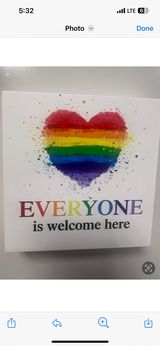
We all recognize that our students will differ in many ways, and I think we can agree that education is the main focus and of utmost importance for our schools. What constitutes education may vary somewhat, but I hope that we all agree that a basic foundational education includes reading, writing, and mathematics. Each day, there are many “spinning plates” that need to be moving for optimal learning. Some of these plates are put into motion by our teachers, but many of the plates are set in motion by families. And sometimes the plates are missing, or they get left alone, sometimes they come crashing down, expectedly or unexpectedly. I understand that there are many challenges that face our students and teachers each day, but I don’t believe that we need a sign in the window or on the wall that tells our students that they are safe and welcome. We can recognize and support students’ unique gifts, talents, personalities and identities through the relationships we develop with them.

These pictures have been seen in Owatonna schools.

I believe in the right to free speech and the ability to display opinions on personal property. However, in a public school, funded by taxpayers and government, we need to keep personal opinions aside. Students can feel welcome, cared for, and supported by teachers and school staff without incorporating personal and political viewpoints.

Please help me in supporting a neutral, safe, learning environment for all our students.

11/27/2023 Regular Meeting

Our regular school board meeting took place at the City Chambers and began at 5:30pm. After the call to order, Pledge of Allegiance and approval of the agenda, Superintendent Elstad used Mission Moment to highlight the OHS Magnet, our high school’s newspaper written by OHS students. This team of students and their director, Ms. Wagner, have achieved a Gold Ranking and Second Place for Best of Show recently. Congratulations to the Magnet team!

There were no comments for the public forum.

The enrollment report was reviewed briefly, no significant changes at this time, but we continue to note the growing difference in numbers of students between our elementary schools. Lincoln ranks highest with 150+ students more than the number of students at Wilson, which has the lowest enrollment. This is a work in progress as we use TeamWorks to help us redefine the boundary lines for school attendance in the future. The board recognizes that the upcoming changes may be very difficult for some families.

During board forum, our student representative announced that Newsies will be the first winter musical to take place in the new Wenger OHS auditorium!

The board completed a first reading of policies 413, 416, 506, 507, 532, 534, 601, 603, and 604. The policy committee reviews and updates policies and presents them to the board for questions or concerns. I had a few comments and questions that I will summarize here, however please watch the meeting video to hear the details. The policy discussion begins at approximately 10:41 into the meeting. https://www.youtube.com/watch?v=GYdGWJzfraY&list=PL7udvyWfNrd3ROTWcu7VO0Vt0NPX_ae51&index=1.

Policy 413 Harassment and Violence

III. Definitions

D. Protected Classifications: Definitions

6. The original definition to be replaced: “Sexual orientation” means having or being perceived as having an emotional or physical or sexual attachment to another person without regard to the sex of that person or having or being perceived as having an orientation for such attachment, or having or being perceived as having a self-image or identity not traditionally associated with one’s biological maleness or femaleness. “Sexual orientation” does not include a physical or sexual attachment to children by an adult.

The new definition will state: “Sexual orientation” means to whom someone is, or is perceived of as being emotionally, physically, or sexually attracted to based on sex or gender identity. A person may be attracted to men, women, both, neither, or to people who are genderqueer, androgynous, or have other gender identities.

My proposal in this change is to maintain the last statement of the original definition and keep this statement in the new definition. My reason for this is to clarify that a physical or sexual attraction by an adult to a student is not acceptable. The policy committee will discuss this at their next meeting and the board will have a second review of this policy at a later date.

Policy 506 Student Discipline

XI. Removal of Students From Class

B. If a student is removed from class more than 10 times in a school year, the school district shall notify the parent or guardian…

My concern was that 10 times is too many and that parents should be notified sooner. Mr. Elstad confirmed that the policy is written to follow state statute, but that Owatonna Public Schools has its own procedures that notify parents after one removal from class.

Policy 601 School District Curriculum and Instruction Goals

III. Definitions

D. “Culturally sustaining” means integrating content and practices that infuse the culture and language of Black, Indigenous, and People of Color communities who have been and continue to be harmed and erased through the education system. (This is a new definition not previously in policy 601.)

My concern for this definition is that the second half of the statement is an opinion and should not be stated as fact and policy. I fully agree with integrating a variety of ethnic cultures into our education system, but do not agree that “we continue to harm and erase” any cultures. I do not believe our teachers do this or that statutes and policy should state this. This policy definition comes from MN Statute 120B.11, and a simple reference to this statute in our policy would suffice in place of this statement. I do not imply that we do anything against the law.

Also in policy 601, IV. Long-term Strategic Plan, A. and B. and C., and in Policy 603 Curriculum Development sections V. and VI., there are multiple changes and several statements that are removed, specifically regarding literacy and reading. When asked about this, I was told that other policies will be updated in the future that address these things and therefore they are not needed here.

Lastly, policy 604 Instructional Curriculum

VI. Civics Test. (This whole section for a civics test requirement is crossed off as the MN Legislature has removed the civics test requirement for graduation.) I asked if OPS would still want to have a Civics class. Mr. Elstad confirmed that our district does have a requirement for students to take a Civics class despite not having to take a formal test as a requirement for graduation.

Mrs. Julie Sullivan, our director of teaching and learning, gave a summary report of the World’s Best Workforce presentation which I have previously outlined. Opportunities for questions were offered. I asked about the action steps moving forward to improve our numbers. Mrs. Sullivan and Mr. Elstad informed us that each school has unique goals and action steps based on the needs of that school. So while the action steps given here are generalized to encompass all schools, each school is working on its own individualized plan and programs.

The board reviewed the Guiding Change document by TeamWorks for the attendance area development project that relates to the enrollment report referenced above. We will vote on this document in December. Currently the design team is working on this project. Then in January, they expect to involve an “input team” of parents and teachers, with a goal for final decisions to be made in March 2024.

The consent agenda approval included minutes from the previous 2 meetings, the disbursement report, and the personnel report.

The board voted and approved 3 items:

  1. Resolution Establishing Polling Places. Each year, the school board designates combined polling places, no changes were made.
  2. World’s Best Workforce Plan
  3. Gifts to the district. Of note, a large donation of $57,142 was given from the Thelma Rice estate in honor of Thelma Rice and Vernon Kasper.

Meeting adjourned.

To all the Mamas ~ The Christmas season is upon us, especially you. Take care, take deep breaths, pause here and there. We are making memories, some hard, but many good. Look at your children’s eyes, smile, kiss their foreheads. The best gift is your time.

“For unto us a child is born, unto us a son is given...” Isaiah 9:6

“…these have been written so that you may believe that Jesus is the Christ, the Son of God; and that by believing you may have life in His name.” John 20:31